Learn when it's cheaper to book in advance, where to meet your driver, and how fixed fares compare to metered rides. A practical guide to help you save money and avoid surprises
 7 min read
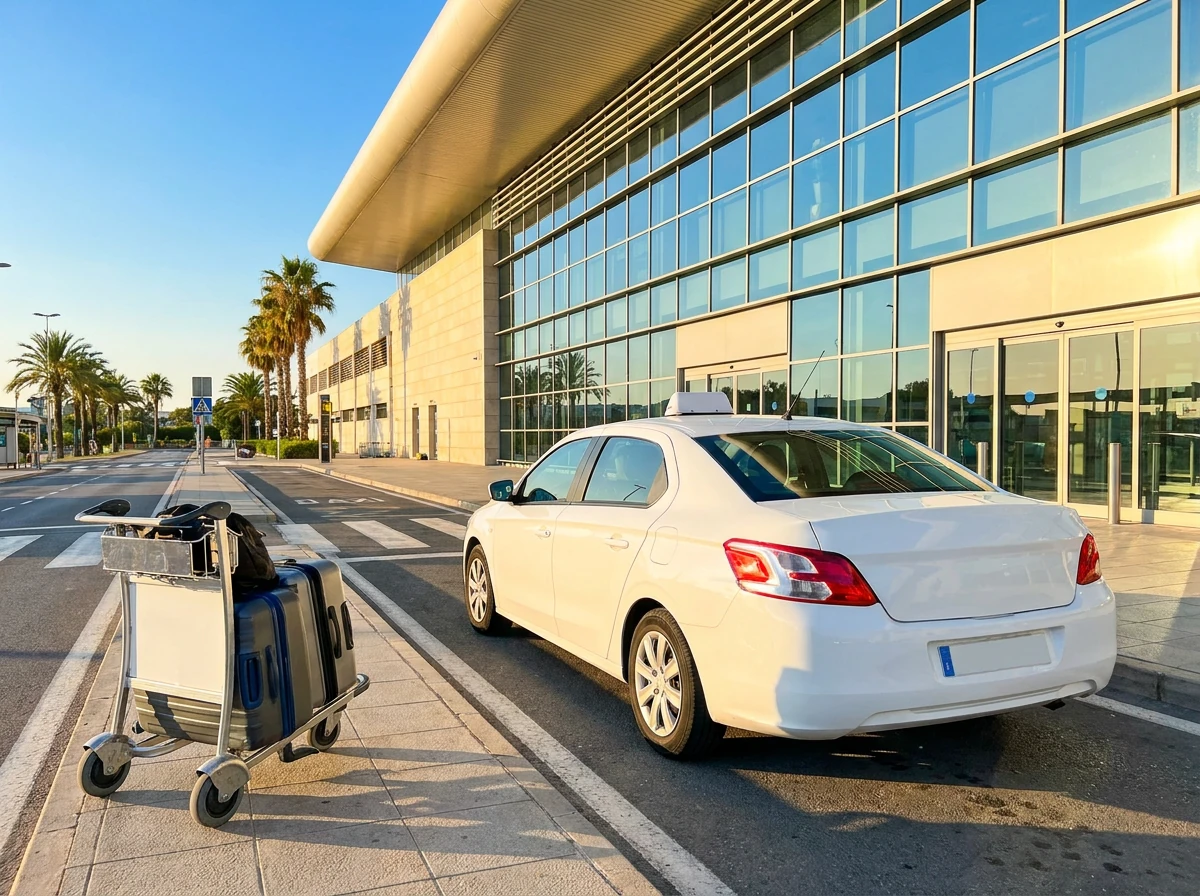
This image was AI-generated with Nano Banana Pro for illustrative purposes only.
The main rule of an airport ride is simple: don't enter the arrivals area without a confirmed booking. While you're standing at the baggage carousel, you have 5–10 calm minutes to open the app, check the route, and lock in the price. By the time you wheel your suitcase into the hall, the car will already be pulling up to the pick-up zone.
The difference between 'ordered at the belt' and 'ordered at the exit' isn't a couple of minutes — it's a different price. During peak flight hours (early weekday mornings, Friday evenings, holiday weekends) the app sees a huge surge of requests from the terminal and raises the demand multiplier. On the same route, in the same car, through the same service, the price can be 30–80% higher.
There's also a second level of optimization: if you see a demand multiplier of 1.5–2.0 at the time of booking, try delaying your order by 7–10 minutes. Most passengers from the same flight will have already departed, and the algorithm will release the price. This only doesn't work in one case — when 2–3 other flights have landed at the same time. Check the airport schedule in advance.
"The sooner you press 'Order', the cheaper your ride. The airport is a place where prices change literally on the go: as you walk from the belt to the exit, the multiplier can rise by 30%."
Most major airport services offer two models: a fixed 'airport-to-center' rate and a regular ride where the price is calculated by kilometers and minutes. On the surface they differ only by the number, but in essence they're two different products, and choosing between them depends on the situation.
A fixed rate is insurance against traffic. You see the total upfront, and no accident on the highway will change it. Use it when traveling during rush hour, in an unfamiliar city, with children, or when you have a train connection — whenever predictability matters more than savings.
A metered ride is almost always cheaper during off-peak hours and for short distances — especially if your hotel is 15–20 minutes from the airport. At night and early weekday mornings, when roads are empty, you can save 20–35% compared to the fixed price.
Simple rule: if arrival time matters more than price — go fixed. If price matters more — go metered. If you're traveling with someone who gets carsick and the driver will have to detour around traffic — definitely go fixed, otherwise waiting time will eat up any savings.
Fixed prices, flight tracking and a driver waiting on arrival
In major airports, there is a designated taxi pick-up zone — usually not right at the terminal exit, but in a parking lot across the road or on a separate level. Signs are labeled 'Taxi pickup', 'Pick-up Zone', or simply 'P1/P2' with a car icon. This is done to prevent traffic jams from dozens of waiting cars forming at the terminal exit.
The driver most likely won't pull right up to the door: the parking in front of the terminal is often paid for them, or even closed to commercial vehicles. Don't take this as 'poor service' — it's normal airport logistics. The app usually shows a hint with the parking lot number and sector where the car is waiting: B3, C12, and so on.
If the driver isn't texting or calling for a while — don't cancel within the first 3–4 minutes. The most common reason for silence is lack of signal in underground parking or in the exit lane. Open the in-app chat: internet messages get through even where calls don't. If the chat is also silent for more than 5 minutes — cancel and re-order; cancellation in this situation is usually free.
A standard sedan can easily fit two suitcases and carry-on. Anything more requires a different vehicle class. Skis, a snowboard, a bike in a bag, oversized luggage — choose 'Wagon' or 'XL' when booking. Otherwise the driver has every right to refuse on the spot, and you'll lose 10–15 minutes re-ordering — at a higher price, since the multiplier typically rises by then.
A child seat is a separate paid option. In most services it must be booked when ordering and cannot be added as 'please bring a seat' to an already-arrived driver. The taxi counter at the airport usually doesn't have seats either. If flying with a child under 7 — book the seat as your very first action, even before you select the route.
Traveling with a pet — read the fare description carefully. Some services' 'pet-friendly' option is only available on specific cars, and there may be only two or three in the airport zone. Pick-up time is 15–25 minutes instead of the usual 5. If you have a transit and the carrier isn't sealed — better to order ahead, on the plane, as soon as connectivity is available.
In the arrivals area of almost any airport, you'll be met by people with signs offering 'cheap city taxi'. Sometimes they're legitimate operators, more often they're not. The price quoted at the exit and the price you'll hear in the car 15 minutes later — they usually differ. Explanations vary: 'traffic', 'new rate', 'you misunderstood', but the result is the same — you pay more.
The main problem isn't even the money — it's that such a ride leaves no digital trail. If you leave something in the car, if there's a dispute about the route, if you feel unwell — there's no one to contact. With a service taxi you have an order number, history, support, and a route recording.
If you've just landed and don't know whether there are reliable taxi apps in this country — Google it on the plane, before landing. Local services exist almost everywhere, and there are usually 2–3 main ones. Install at least one before leaving the terminal.
Paying in the app with a pre-linked card isn't just convenient — it's also legally safer. The receipt is tied to the order, billing disputes are resolved through support rather than 'on the roadside'. This is especially important in a foreign country, where you might be unsure about the exchange rate and not immediately realize you've overpaid.
If the driver asks to pay cash outside the app, citing 'the terminal isn't working' — that's a red flag. In most services, in-app payment is set by default, and the driver has no right to bypass it. Decline and leave a review.
As a precaution, keep a small amount of local cash: sometimes the driver asks you to pay an airport parking fee separately — this is legal and usually costs little. But if the amount is large — it's no longer a parking fee, it's a scam.
Match the car's plate number with what's shown in the app. Make and color matching isn't enough. Number matches — get in.
Confirm the destination in the app is the one you actually want. After a long flight it's easy to miss that the hotel address is saved from an old trip.
If it's customary in the country — share your route with a close person using the in-app button. It takes 3 seconds and eliminates unnecessary worry.
Don't rush to close the door if something doesn't add up. Better to lose a minute in the parking lot than 40 minutes resolving an issue in a foreign city.
 8 min read
From the famous Nissi Beach to hidden coves only locals know about — here's your guide to Cyprus beaches by taxi.
 5 min read
Every country has its own taxi culture. Learn the unspoken rules that will make your ride smoother and more respectful.
 5 min read
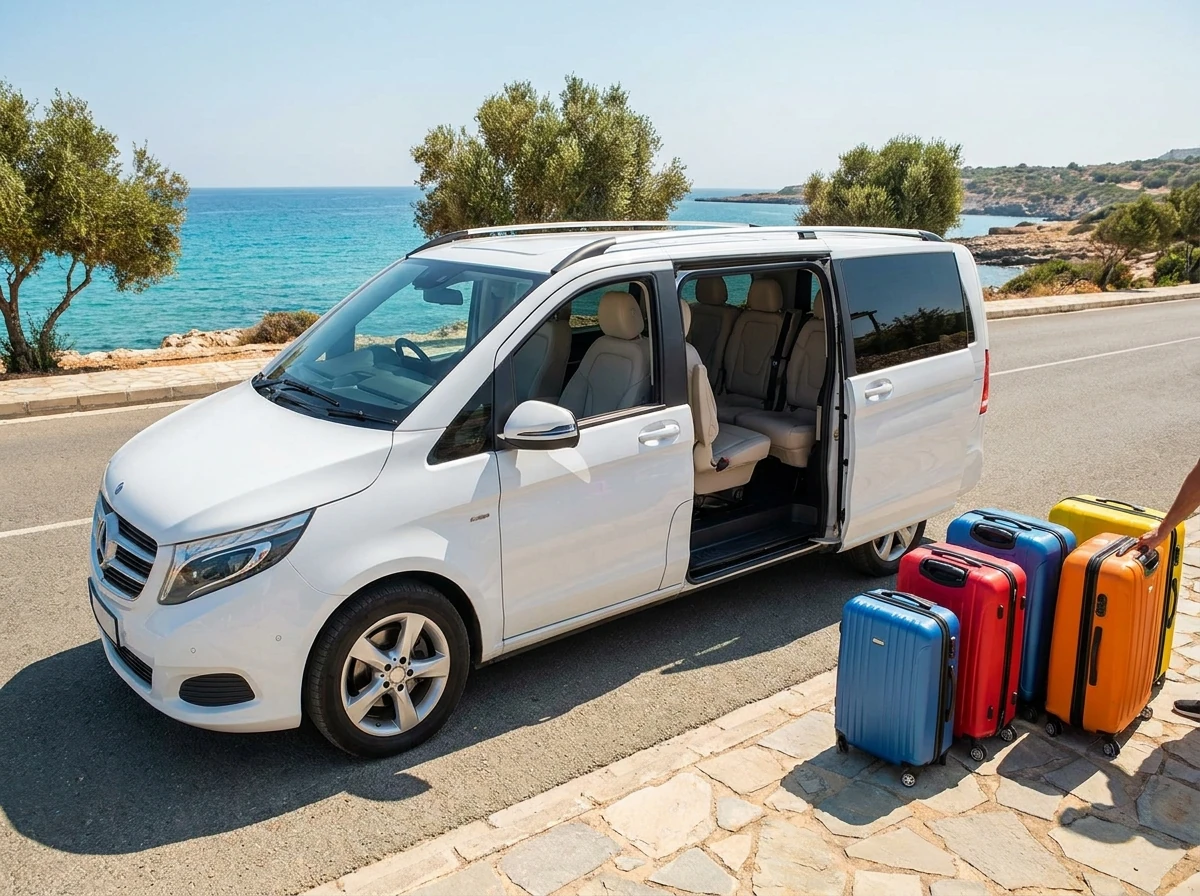
Traveling with a group of 6 or more? A minibus might save you money and hassle compared to ordering multiple taxis.
From airports and hotels transfers journey every time and anywhere on Cyprus
#322, Protaras - Cavo Greco Avenue Paralimni Town Postal code 5296
Copyright © 2024 TheQTaxi.com