From ride-hailing apps to calling a local service, here's a complete guide to getting a taxi in Cyprus — including tips for tourists who don't speak Greek.
 6 min read
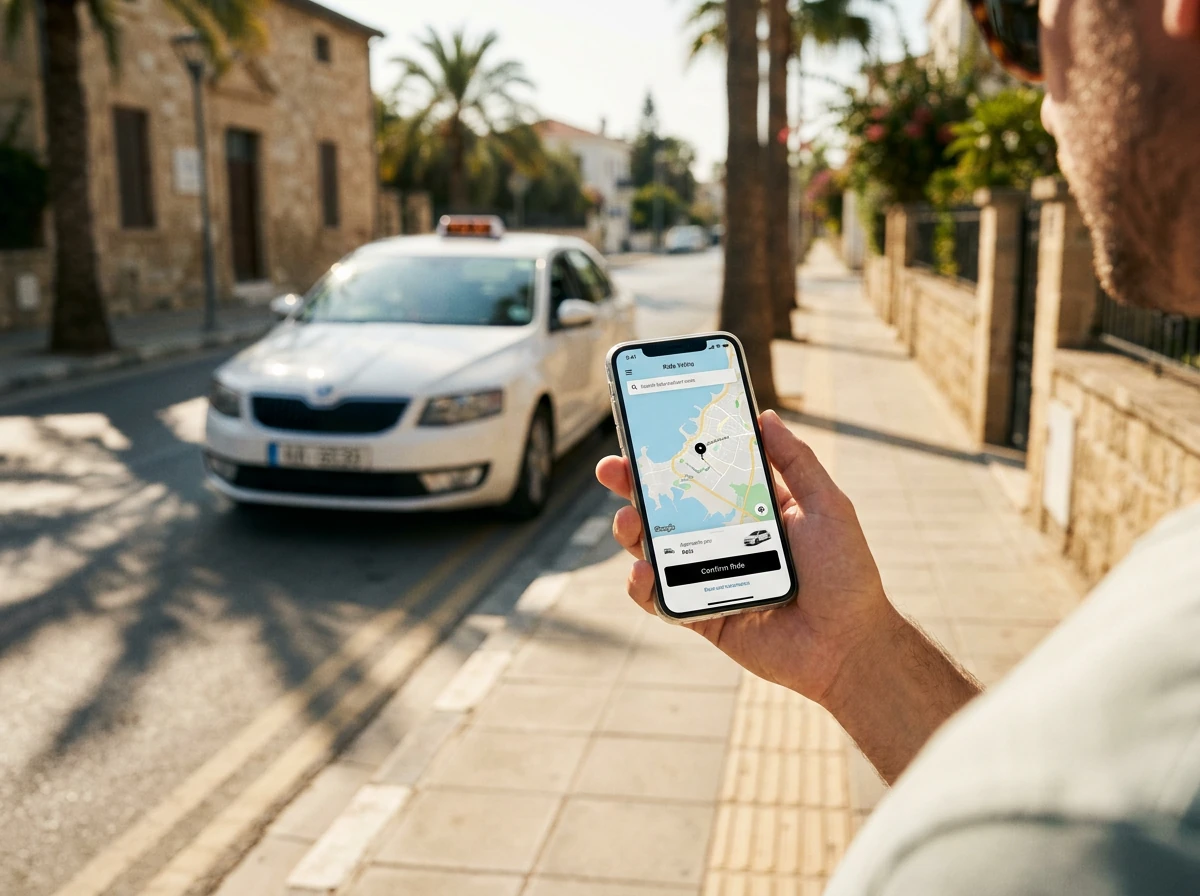
This image was AI-generated with Nano Banana Pro for illustrative purposes only.
Cyprus has a growing ride-hailing scene, though it differs from what you might be used to in other European countries. Bolt is the most widely available app, operating in Nicosia, Limassol, Larnaca, Paphos, and Ayia Napa. It offers the familiar flow: set your pickup point, enter a destination, see the price upfront, and track the driver on a map. Payment is through the app with a card or in cash — your choice.
Bolt's pricing in Cyprus is generally affordable: a ride within Nicosia city center typically costs €4–8, while an airport transfer to Larnaca center runs about €15–20. During peak times — Friday and Saturday nights, summer weekends in Ayia Napa — you'll see surge pricing that can push fares up by 30–50%. The app shows the multiplier before you confirm, so there are no surprises.
Beyond Bolt, several local services offer app-based or web-based booking. These are particularly useful for pre-booked airport transfers, long-distance rides between cities, or trips to remote areas where Bolt coverage is sparse. Local apps often provide fixed rates for popular routes and allow you to specify vehicle type, child seats, and luggage requirements in advance.
Calling a taxi by phone remains one of the most reliable methods in Cyprus, especially outside the main cities. Most taxi companies operate a dispatch center where a dispatcher speaks both Greek and English. When you call, state your pickup location, destination, and any special requirements such as a child seat, extra luggage space, or a specific pick-up time.
The advantage of calling is that you can negotiate a fixed price for longer routes. A phone booking from Larnaca airport to Limassol, for example, can often be agreed at a set rate of €50–55 — sometimes lower than the metered equivalent. This is especially valuable if you're traveling during a period of surge pricing on the apps.
Keep in mind that phone-dispatched taxis may take 10–20 minutes to arrive depending on your location and time of day. In tourist areas during summer, wait times can stretch further. Booking at least 30 minutes ahead for scheduled rides is recommended. Also, have your address written down or saved in your phone — pronunciation of Cypriot street names can be tricky for newcomers.

Fixed prices, flight tracking and a driver waiting on arrival
Street hailing works in the central areas of Nicosia, Limassol, and Larnaca, though it's less common than in major European capitals. Look for taxis with a lit "TAXI" sign on the roof and a green light on the dashboard indicating availability. Wave one down, state your destination, and confirm the approximate fare before getting in.
At taxi ranks — found outside airports, bus stations, and major hotels — you'll find a queue of waiting taxis. Prices at official ranks are regulated and posted on a board, but always double-check before starting the ride. At Larnaca and Paphos airports, there are fixed-rate boards showing prices to popular destinations. These rates are set by the government and shouldn't be exceeded.
Avoid accepting rides from individuals who approach you inside the terminal or outside the airport fence offering "cheap taxi." These are unlicensed operators who may charge significantly more than the official rate, and you have no recourse if something goes wrong. Licensed taxis in Cyprus have a distinctive yellow or cream color scheme and display a taxi license number on the dashboard and rear bumper.
English is widely spoken across Cyprus, especially in the tourism sector, so language is rarely a serious barrier to getting a taxi. Most drivers, dispatchers, and app interfaces operate comfortably in English. However, knowing a few Greek words can smooth the interaction and earn you a friendlier ride: "Porta sou" (your door), "Akrivos" (straight ahead), and "Stamatise" (stop here) cover the basics.
For pickup and drop-off, the easiest approach is to show the driver a screenshot of your destination on your phone's map. This eliminates any confusion with street names, which in Cyprus may appear in both Greek and Latin script — sometimes with different transliterations. Hotel names are usually straightforward, but for private villas or apartments, having the exact GPS pin or a Google Maps link is invaluable.
If you're calling to book, most dispatch centers will understand you in English. Speak slowly, spell out unfamiliar street names letter by letter, and ask them to repeat the details back to you. If communication breaks down entirely, messaging via WhatsApp or Telegram is often easier — you can send your location pin and the driver can confirm with a thumbs-up emoji.
"When in doubt, show, don't tell. A screenshot of your destination on Google Maps works better than any attempt to pronounce a Cypriot street name in Greek or English."
 8 min read
Both airports serve Cyprus but they're not interchangeable. Here's how to choose the right one for your trip.
 6 min read
Higher fares, fewer drivers, and late-night travel come with their own challenges. Here's how to make your ride safer, smoother, and more affordable.
 7 min read
Traveling with children requires extra preparation. From car seats to keeping kids entertained, here's what you need to know.
From airports and hotels transfers journey every time and anywhere on Cyprus
#322, Protaras - Cavo Greco Avenue Paralimni Town Postal code 5296
Copyright © 2024 TheQTaxi.com