Higher fares, fewer drivers, and late-night travel come with their own challenges. Here's how to make your ride safer, smoother, and more affordable.
 6 min read
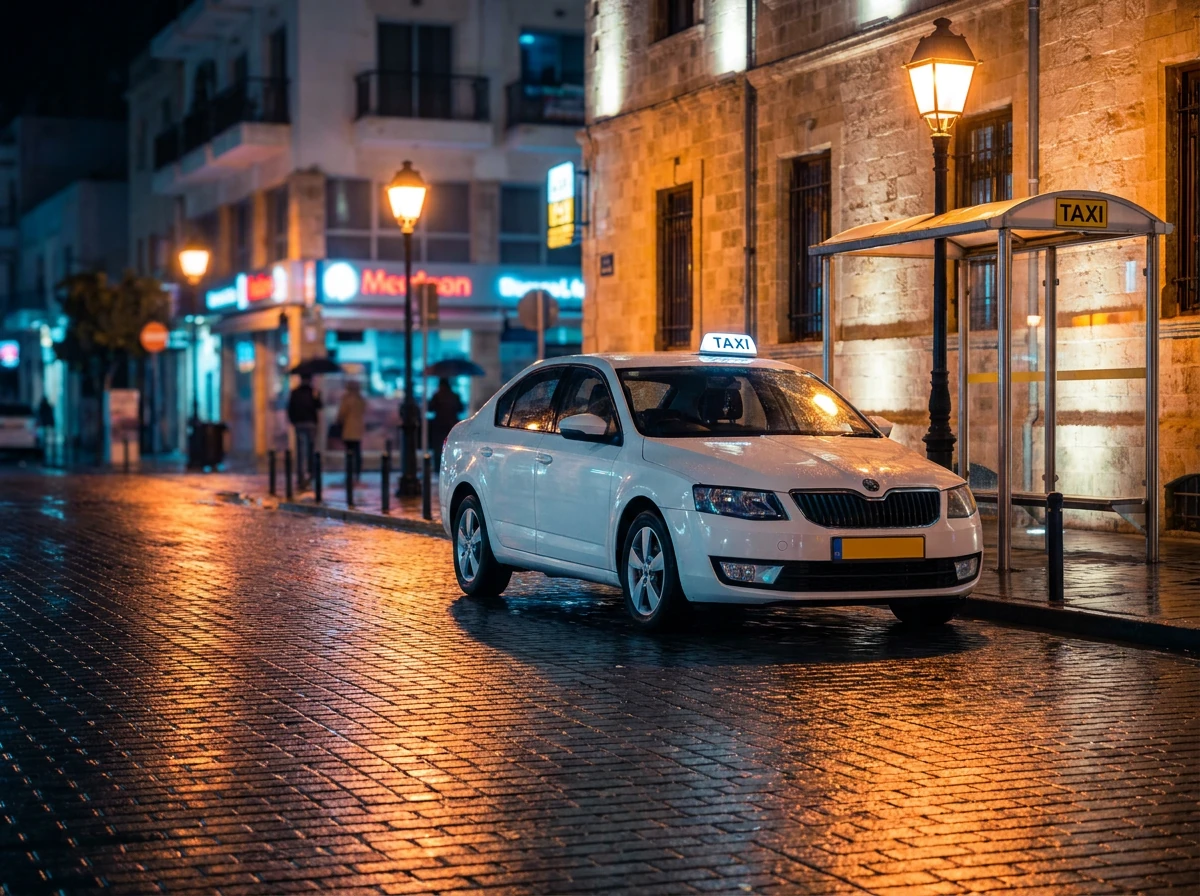
This image was AI-generated with Nano Banana Pro for illustrative purposes only.
At night, the number of available taxis drops significantly. In a city like Limassol or Paphos, you might see plenty of taxis during the day, but after midnight the supply thins out quickly. Drivers finish their shifts, and the ones still working are often on longer trips or waiting at high-demand locations like airports and hotel districts. Hailing a cab on a quiet street at 1 AM is a gamble — you might wait 20 minutes or more.
Pre-booking solves this completely. Whether you use a ride-hailing app, call a local taxi company, or book through a transfer service, scheduling your ride 15–30 minutes ahead guarantees a car will be there when you need it. In Cyprus, where many visitors rely on pre-arranged transfers rather than apps, this is standard practice. A driver arrives at a specific time, you get in, and you're on your way.
Pre-booking also lets you lock in the fare before demand surges hit. Night tariffs are already higher than daytime rates in most countries, including Cyprus. But a fixed-price booking made in advance protects you from additional demand-based increases, especially on weekends and during peak holiday periods.
"The difference between a night ride that costs €15 and one that costs €35 is usually not the distance — it's whether you booked it at 10 PM or decided at 2 AM that you needed to leave."
Night fares are higher than day fares — that's standard across the taxi industry. But 'higher' doesn't mean 'unlimited'. In Cyprus, the tariff is regulated, and the meter rate at night is fixed by law. If you're using a traditional taxi, the tariff card on the dashboard shows the exact per-kilometer rate. If you're using an app, the estimated fare is shown before you confirm.
The problem arises with unlicensed or informal taxis that operate without meters. Without a regulated rate, the driver can quote any number, and at night — when you're tired, maybe a bit rushed, and have fewer alternatives — you're in a weak negotiating position. This is why pre-booked transfers with fixed prices are popular in Cyprus: the price is agreed in advance, and there's nothing to negotiate at the end of the ride.
Before you confirm any ride, check the estimated price and compare it to what you'd expect for the distance. Apps usually show the route on a map. If the route looks longer than necessary — a detour you didn't ask for — you can cancel before the ride starts. Once you're in the car, the options narrow considerably.
Where you wait for your taxi at night matters more than you might think. A well-lit street, a hotel lobby, a restaurant entrance, or a shopping center parking lot are all good pick-up points. They offer visibility, security cameras, and the presence of other people. A dark side street, an empty bus stop, or an unlit section of road is the opposite — you're isolated, harder to find, and more vulnerable.
In Cypriot cities, the main streets and commercial areas are generally well-lit and active even late at night. The areas around hotels, restaurants, and bars typically have plenty of foot traffic and taxis passing by. If you're staying in a more residential area, walk to the nearest main road or landmark to meet your ride rather than giving a vague address on a dark street.
If your driver calls to clarify your location, give them the name of a visible landmark — a hotel, a church, a shop, a gas station — rather than trying to describe a street corner that looks like every other street corner in the dark. Landmarks are unambiguous and easy to spot, which means the driver finds you faster and you spend less time standing outside.

Fixed prices, flight tracking and a driver waiting on arrival
At night, sharing your ride details shifts from a good habit to an essential one. The reasons are practical: fewer people are around, your phone battery might be low after a long day, and you might not be as alert as you'd be during the day. Sending your route, driver details, and estimated arrival to a friend or family member takes seconds and creates a safety net.
If you're using an app, the built-in share function sends a live map link that your contact can follow in real time. If you're in a pre-booked taxi without an app, send a text with the driver's name, the vehicle details from your booking confirmation, and your expected arrival time. Ask your contact to text you when you should have arrived — if you don't respond, they have all the information they need to act.
Digital payments are convenient, but they're not infallible. Card terminals in taxis can fail, apps can crash, mobile networks can drop, and at night — when bank servers in some countries run maintenance — payment issues are more common than you'd think. Having enough cash to cover the fare isn't about distrust; it's about not being stranded at the side of the road at midnight because of a technical glitch.
In Cyprus, cash is widely accepted and in many places preferred. Most traditional taxis operate primarily on cash, though some now accept cards. Pre-booked transfer services usually offer both options. Keep a mix of notes and coins — enough for at least two rides. It doesn't need to be a large amount; €30–50 in small denominations is plenty for most situations.
If you're out at night and realize your phone battery is critically low, prioritize paying with cash over card. A card payment that requires the driver's terminal and your phone's banking app is two points of failure. Cash is one. Simple and reliable, especially when you're tired and just want to get home.
 7 min read
Traveling with children requires extra preparation. From car seats to keeping kids entertained, here's what you need to know.
 5 min read
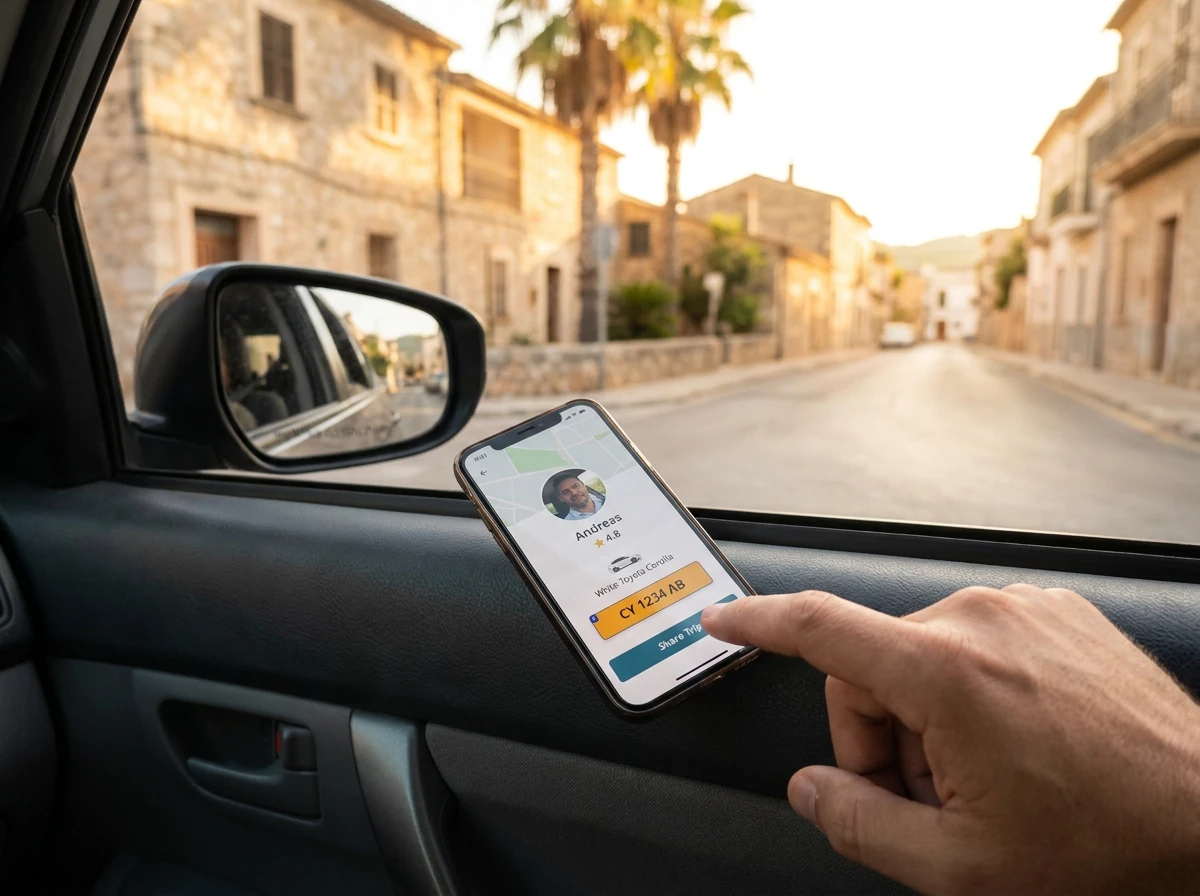
Simple habits that take just a few seconds before your ride but can make your trip safer — especially when you're traveling in a new city.
 6 min read
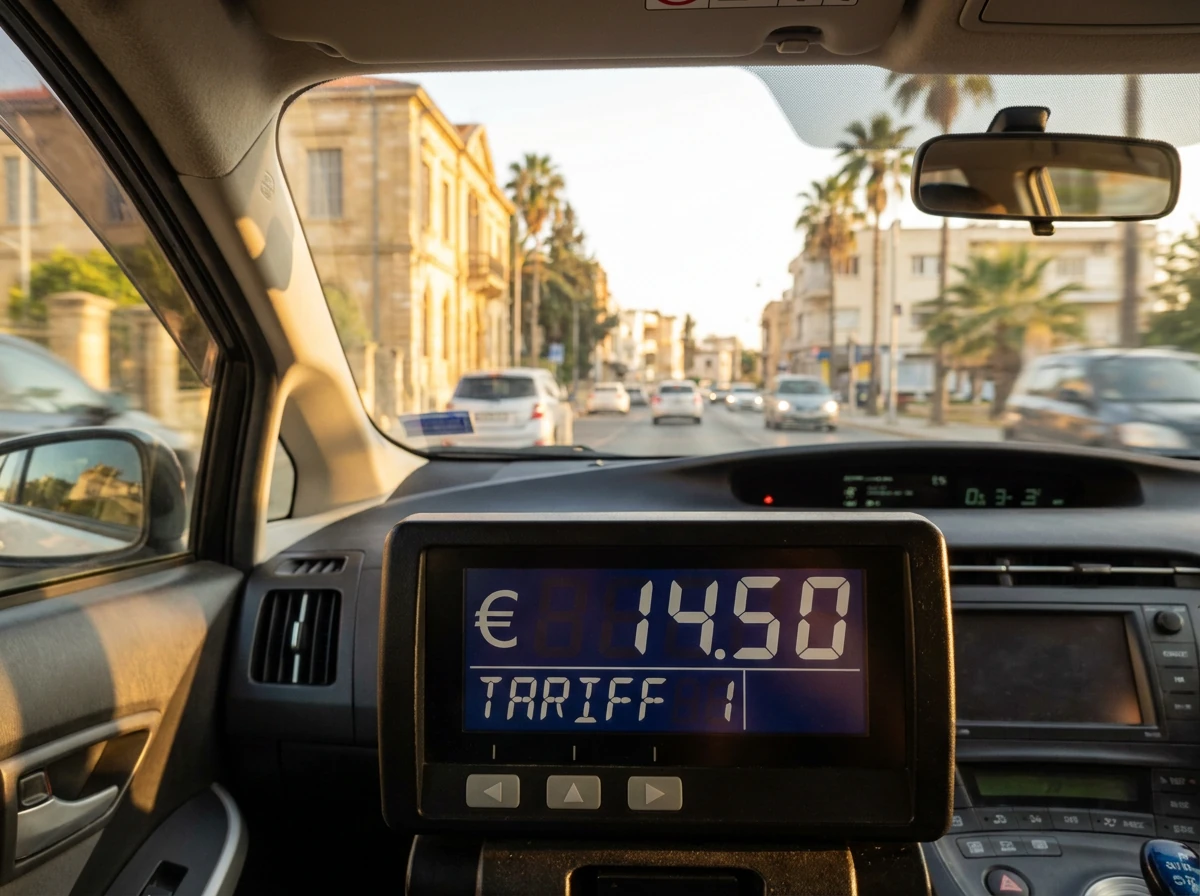
Base fare, waiting time, night surcharges, and peak demand — find out what really affects the final price and how to avoid paying more than necessary.
From airports and hotels transfers journey every time and anywhere on Cyprus
#322, Protaras - Cavo Greco Avenue Paralimni Town Postal code 5296
Copyright © 2024 TheQTaxi.com