A five-star rating isn't always the best option. Learn how ratings affect drivers and why tipping is an important part of the taxi experience.
 5 min read
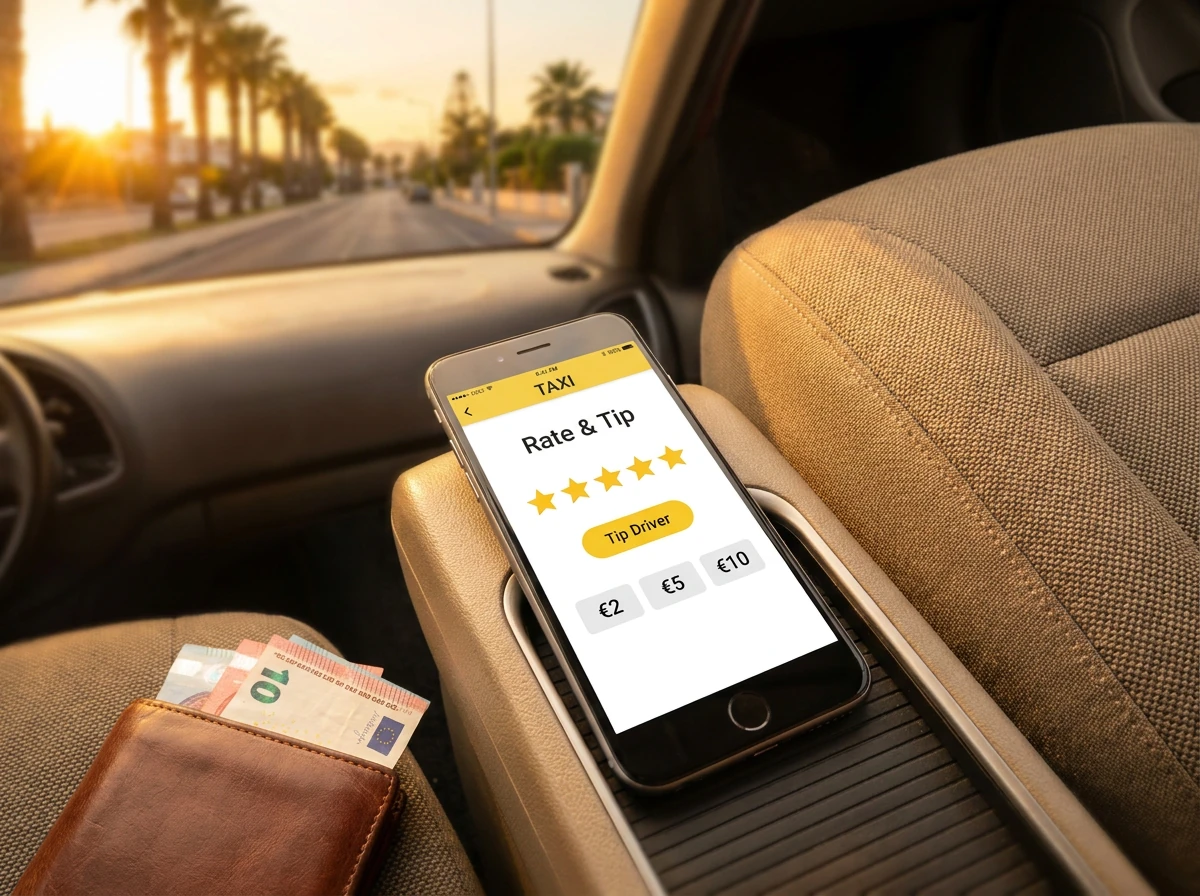
This image was AI-generated with Nano Banana Pro for illustrative purposes only.
Every ride-hailing app uses a two-way rating system: passengers rate drivers, and drivers rate passengers. For drivers, this rating isn't just a vanity metric — it directly affects their ability to work. Most platforms deactivate drivers whose rating falls below a threshold, typically 4.4–4.6 depending on the market. A driver with a 4.3 rating after a few thousand rides can lose their livelihood over a small number of low scores.
Every rating carries weight. A single 1-star review from an unhappy passenger can pull a driver's average down significantly, especially if they don't have a large volume of rides to offset it. Conversely, a fair 4-star rating for an adequate but unremarkable ride is more useful feedback than an automatic 5-star that tells the driver nothing about what they could improve.
In Cyprus, where many drivers work through local taxi companies rather than global apps, the rating system may not be as visible. But the principle remains: feedback matters. If you booked through a service like QTaxi, leaving a review helps other travelers make informed choices and helps the service maintain quality standards.
Tipping in taxis is a gesture of appreciation, not a requirement. The question of when to tip comes down to one simple test: did the driver do something beyond the basic job of getting you from point A to point B? Helped with your luggage? Took a quieter route when you mentioned you had a headache? Waited an extra minute while you found your keys? These small gestures deserve recognition.
The amount doesn't need to be large. In most European countries, including Cyprus, rounding up to the nearest euro or adding 5–10% of the fare is standard. On a €15 ride, that means leaving €1–2. For a longer airport transfer of €40–60, €3–5 is a fair tip. The gesture matters more than the amount — a driver who receives even a small tip knows their effort was noticed.
There are situations where a tip is less expected: short rides within the city where you barely interact with the driver, rides where the car was uncomfortable or the driver was rude, or situations where the fare already includes a service charge. Tipping is always optional, and you should never feel pressured into it.

Fixed prices, flight tracking and a driver waiting on arrival
The instinct to leave five stars on every ride is understandable — the driver did their job, you arrived safely, why not? But when every passenger leaves five stars regardless of the experience, the rating system loses its meaning. A driver who takes scenic detours to inflate the fare gets the same rating as a driver who took the fastest route and helped with your bags.
Use the full range of the scale. Five stars means the ride was excellent — clean car, polite driver, efficient route, perhaps a small extra like helping with luggage or offering a phone charger. Four stars means the ride was fine but nothing special. Three stars means there was a noticeable issue — the driver was unfriendly, the route seemed unnecessarily long, or the car had an unpleasant smell.
Ratings below three should be reserved for genuine problems: dangerous driving, a significantly longer route than necessary, or a driver who made you feel uncomfortable. Always leave a written comment with a low rating — it helps the platform or company investigate and, if necessary, take action. A rating without context is frustrating for everyone involved.
"If you give five stars to every driver, you're not being kind — you're making it impossible to tell the difference between a good driver and a great one. Honest ratings help the system work for everyone."
Tipping customs vary enormously from country to country, and what's generous in one place might be confusing or even offensive in another. In the United States, a 15–20% tip is standard and expected — drivers rely on tips as part of their income. In Japan, tipping is not part of the culture at all, and trying to tip a taxi driver may cause confusion or be politely refused.
In Cyprus, tipping falls somewhere in the middle. It's not expected as a matter of course, but it's appreciated when offered. Rounding up is common, and a small tip for good service — especially on longer rides or airport transfers — is a welcome gesture. Many visitors to Cyprus come from countries where tipping is more ingrained, so drivers are accustomed to receiving tips, but no one will be offended if you don't offer one.
As a general rule for any destination: research the local tipping culture before you arrive. A quick search will tell you what's customary. When in doubt, rounding up is almost always safe — it's a universal gesture that translates well in every culture, and it never causes offense.
 9 min read
How much does it really cost to spend a day in a new city using taxis only, and why it can sometimes be cheaper than renting a car.
 7 min read
Learn when it's cheaper to book in advance, where to meet your driver, and how fixed fares compare to metered rides. A practical guide to help you save money and avoid surprises
 8 min read
From the famous Nissi Beach to hidden coves only locals know about — here's your guide to Cyprus beaches by taxi.
From airports and hotels transfers journey every time and anywhere on Cyprus
#322, Protaras - Cavo Greco Avenue Paralimni Town Postal code 5296
Copyright © 2024 TheQTaxi.com