Base fare, waiting time, night surcharges, and peak demand — find out what really affects the final price and how to avoid paying more than necessary.
 6 min read
This image was AI-generated with Nano Banana Pro for illustrative purposes only.
Every taxi fare, whether it's a traditional metered taxi or a ride-hailing app, is built from the same basic components: a base fare (sometimes called a flag drop or entry fee), a per-kilometer or per-mile rate, and a per-minute rate for time spent in the car. The meter or algorithm combines these in real time, and the total at the end of the ride is the sum of all three.
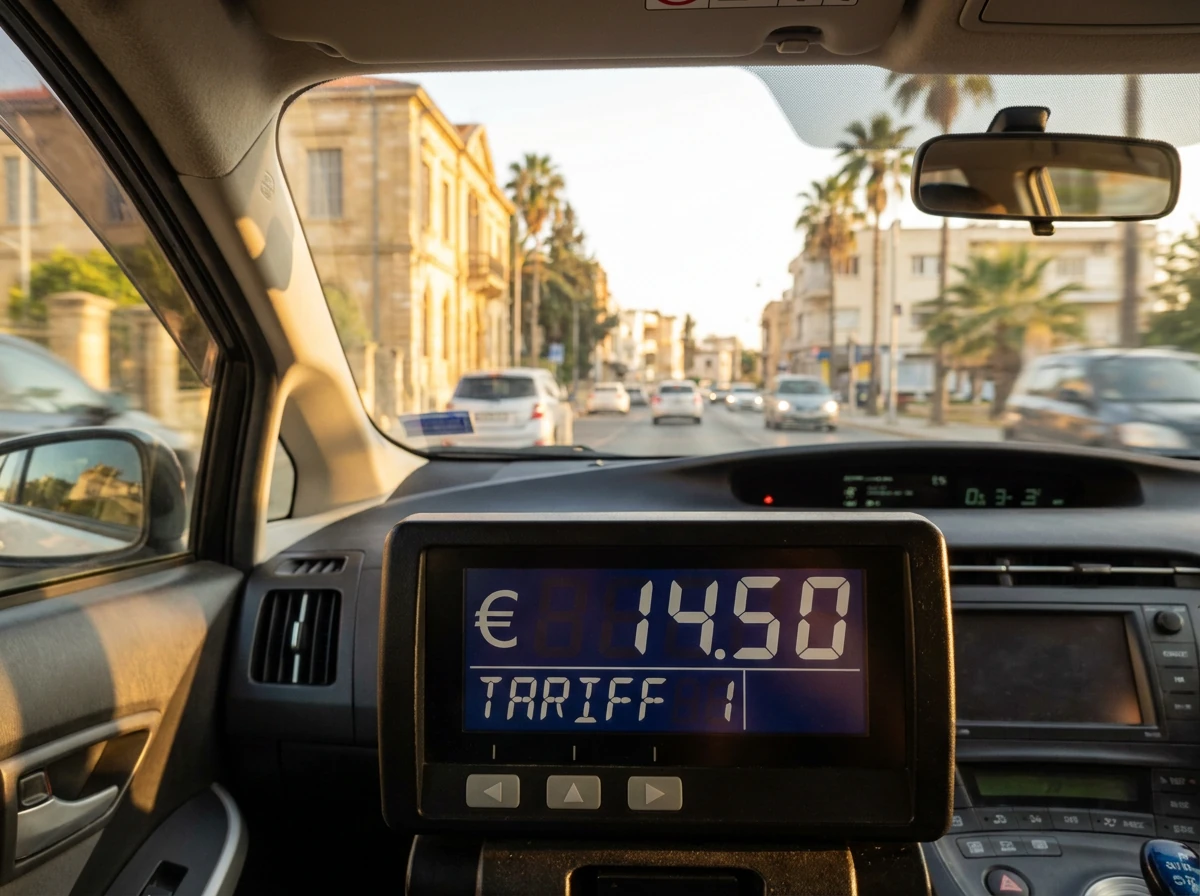
In Cyprus, traditional taxis use a government-regulated tariff system. Tariff 1 applies during daytime hours (typically 6:00 to 20:30) and Tariff 2 at night, on Sundays, and on public holidays. The difference is significant — Tariff 2 can be 30–50% higher per kilometer than Tariff 1. If you're taking a taxi from Paphos airport to your hotel at 9 PM instead of 6 PM, you'll notice the difference on the receipt.
Pre-booked transfer services like QTaxi work differently. They offer a fixed price agreed upon at the time of booking, so there's no meter running and no surprise at the end. The price accounts for distance, time of day, and any tolls or airport fees. For airport transfers especially, this model removes the uncertainty that comes with metered rides.
In ride-hailing apps, the demand multiplier — often shown as a number like 1.3x or 2.0x — is the algorithm's way of balancing supply and demand. When more passengers are requesting rides than there are available drivers, the price goes up. When demand drops or more drivers come online, it comes back down. It's purely mathematical, not personal.
The multiplier applies to the entire fare: base fare, distance, and time. A 1.5x multiplier on a ride that would normally cost €20 means you'll pay €30. The same multiplier on a €40 ride means €60. It doesn't sound dramatic until you see the actual numbers on your screen.
There are practical ways to reduce the impact. If you see a high multiplier, wait 5–10 minutes if your schedule allows. Demand often spikes in short bursts — after a concert ends, when flights land, or when the bars close — and then drops just as quickly. Pre-booking, even 15–20 minutes ahead, can also lock in a standard rate before the surge hits your area.
"A demand multiplier is not a penalty — it's a price signal. When you see 2.0x, the app is telling you that right now is the most expensive time to ride. If you can wait 10 minutes, you'll almost always pay less."
Night surcharges are the oldest form of dynamic pricing in the taxi industry. Long before apps existed, taxi meters had a manual switch — the driver would flip it to Tariff 2 after dark, and the per-kilometer rate would jump. The reasoning is straightforward: fewer drivers are willing to work at night, so higher fares incentivize enough supply to meet demand.
In Cyprus, the night tariff typically starts at 20:30 and runs until 06:00 the next morning. Sundays and public holidays also fall under the higher tariff for the full 24 hours. If you're arriving at Larnaca airport on a late flight, the fare to Limassol will be noticeably different from the same trip at midday. The regulated tariff is printed on a card inside the taxi — you have the right to see it.
Holiday periods can add another layer. During major events like the Limassol Carnival, Easter week, or the summer tourist season, demand is high across the island. Traditional taxi meters don't change for events (they stick to the regulated tariff), but availability drops and wait times increase. Pre-booking is the most reliable way to avoid long waits and inflated prices during these periods.

Fixed prices, flight tracking and a driver waiting on arrival
The fare on the meter or in the app is not always the final cost. Several common extras can appear depending on the route, the timing, and the type of service. Knowing what they are in advance prevents the unpleasant surprise of a bill that's 15–20% higher than expected.
Waiting time is the most common add-on. If the driver is asked to wait at a stop — while you run into a shop, collect a parcel, or wait for a companion — the meter keeps running, or the app adds per-minute charges. In Cyprus, some taxi drivers charge a minimum waiting fee even for brief stops, so it's worth asking before you ask them to wait.
Tolls and airport fees are typically separate from the fare. In Cyprus, there are no toll roads on the main highway network, so tolls aren't a concern. Airport parking fees, however, are real — drivers pay to enter the pick-up zone at both Larnaca and Paphos airports, and this cost is sometimes added to the fare. With pre-booked transfers, the airport fee is usually included in the fixed price, so there's nothing extra to pay on arrival.
 5 min read
A five-star rating isn't always the best option. Learn how ratings affect drivers and why tipping is an important part of the taxi experience.
 9 min read
How much does it really cost to spend a day in a new city using taxis only, and why it can sometimes be cheaper than renting a car.
 7 min read
Learn when it's cheaper to book in advance, where to meet your driver, and how fixed fares compare to metered rides. A practical guide to help you save money and avoid surprises
From airports and hotels transfers journey every time and anywhere on Cyprus
#322, Protaras - Cavo Greco Avenue Paralimni Town Postal code 5296
Copyright © 2024 TheQTaxi.com